
Surface finishes
Smooth Machining Services
Smooth machining is like an ‘As machined’ finish but with slightly less evident machine marks. Parts are machined at a lower feed, no hand polishing is applied.
Smooth machining (Ra 1.6μm/Ra 64μin)
A finishing CNC machining operation can be applied to the part to reduce its surface roughness. The standard smoothing surface roughness is Ra 1.6 μm (64 μin). Machine marks are less evident but still visible.
Color | n/a |
Texture | n/a |
Price | $ |
Material | All materials |
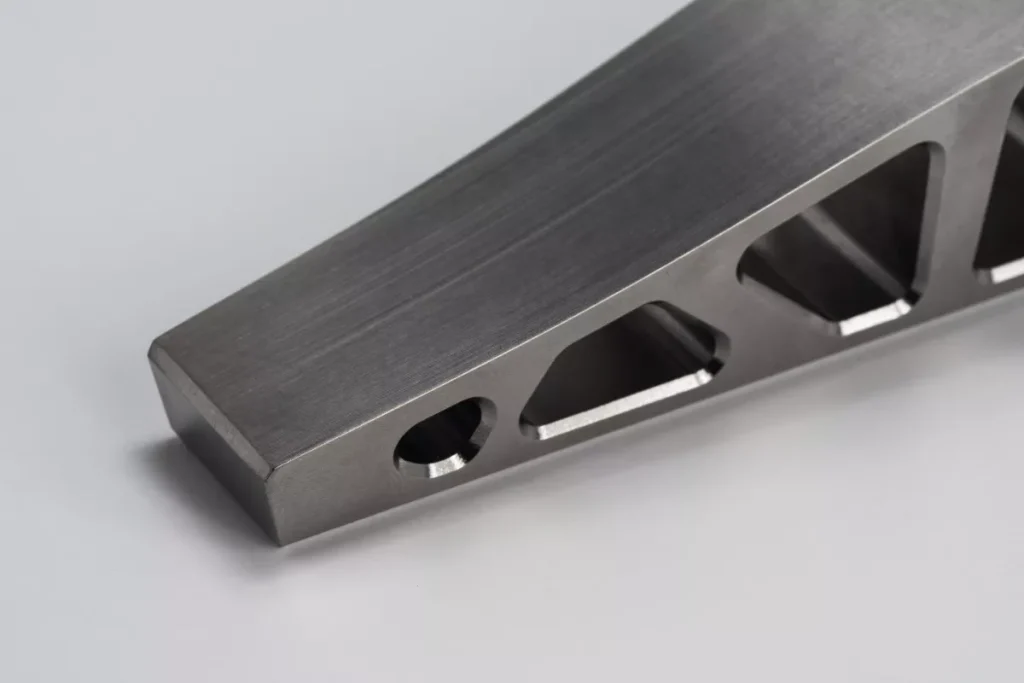
Smooth Machining
Smooth machining can be applied to the part to reduce its surface roughness. Machine marks are less evident but still visible.
Manual Sanding
We can smooth smaller batches of cnc parts by hand. Hand sanding leaves behind fewer scratches than a power tool and it is easier to sand contours and tight corners.
Why smooth machining?
Smooth machining (Ra 1.6μm / Ra 63μin) denotes a surface finish that is not only visually appealing but also functionally significant in various applications.
Achieving a smooth machined surface, particularly with an Ra of 1.6μm / 63μin, demands meticulous planning, precise tooling, and optimized machining parameters. This surface finish is often sought in applications where reduced friction, enhanced wear resistance, or premium aesthetics are paramount.
Some of the most common applications for smooth machining include the following
- Machining of medical devices
Medical devices are often required to have a very smooth finish. This is because any irregularities on the surface of the device could cause discomfort or even injuries to the patient. Smooth machining is often used to manufacture medical devices such as syringes, surgical blades, and other medical instruments.
- Machining of aerospace components
Aerospace components also require a very smooth finish. This is because any imperfections on the surface of these components can cause turbulence and drag during flight. As a result, smooth machining is often used to manufacture aerospace components such as wings, fuselages, and tail sections.
- Machining of high-precision parts
High-precision parts also require a smooth finish. This is because any bumps or irregularities on the surface of these parts can cause errors during operation. Smooth machining is often used to manufacture high-precision parts such as gears, bearings, and cams.