CNC machining materials

Tool Steel CNC Machining

Tool steel is a durable, high hardness, high wear resistance and deformation resistance steel material used to make cutting tools, gauges, dies and wear resistant tools.

Improve your manufacturing process with precision tool steel parts and assemblies from Anpllocnc, an ISO 9001:2015-certified machine shop. Innovative equipment, highly trained personnel, and a dedication to quality enable us to provide an array of client-tailored tool steel machining services that streamline supply chains.

Tool Steel Machining

We understand the important balance of machining quickly and accurately in tough material such as tool steel.

Our 4- and 5-axis machining capabilities and quick set tooling allow us to achieve rapid machining times and best value for every batch size of tool steel cnc parts.

With our extensive tool steel cnc machining experience, we are happy to share our machining expertise and design advice to ensure the best outcome for your project.

Our fully networked CAD/CAM software allows us to work with 2D and 3D file formats, as well as hand sketches and samples to bring your design to life.

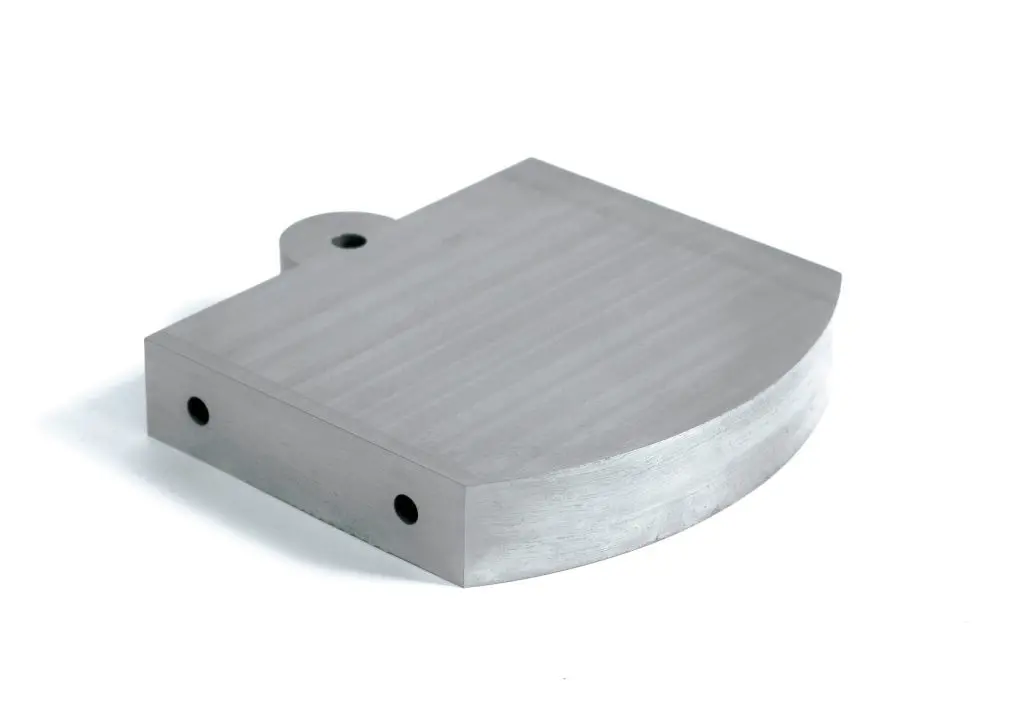
tool Steel A36
Processes Lead Time Finishing Options Tolerance Price Applications
CNC Mill CNC Lathe EDM Hobbing As fast as 7 days Media Blasting, Vibratory Tumbling, Black Oxide, Powdercoating With drawing: as low as +/- 0.005 mmNo drawing: ISO 2768 medium $$$ Tools, fixtures, tool holders, punches

About the Tool Steel Material

High hardness and stiffness, abrasion resistant. Tool steels are metal alloys with exceptionally high hardness, stiffness and abrasion resistance. Suitable for manufacturing industrial tools.Classification of steel for tooling The tool steel is classified into six types including: water-hardening, cold-work, shock-resisting, high-speed, hot-work, and special purpose. The choice is determined by the needs like price, operating temperature, desired hardness of the surface the strength, resilience to shock and toughness.. The more extreme the conditions of service (higher temperatures, abrasiveness and corrosion, greater load) the higher the alloy content, and consequently the carbide content needed to make the tool steel.

A2 Tool Steel offers excellent wear resistance and toughness. Due to its high compressive strength and dimensional stability, this material is commonly used to make fixtures, tools, tool holders, gauges and punches.

D2 Tool Steel is an air-hardening material, and it offers superior wear-resistance when compared to A2 Tool Steel. D2 is most often used for stamps/dies and cutting blades.

Machining Capabilities and Services Offered

We specialize in tool steel precision CNC machining for difficult applications. Our expert team works with you to develop the best manufacturing solution using an established consultative approach aimed at successfully addressing performance, fitment, longevity, and safety.

Type of Tool Steel

Tool steels are a family of carbon and alloy steels that exhibit high hardness, abrasion resistance, and deformation resistance. These quality, along with the materials’ ability to hold a cutting edge at elevated temperatures, make them ideal for use in tooling used to shape other materials, as well as other physically demanding applications.

There are multiple “groups” of tool steels, including water-hardening, cold-work, shock-resisting, high-speed, hot-working, and special purpose tool steels. Each group offers different mechanical and physical characteristics that make them well-suited to different applications. Water-hardening tool steels, for example, are used to produce machine parts and shear blades; our manufacturing process tooling and dies are primarily fabricated from tool steel.

AISI and SAE in the United States classify tool steels

Defining property AISI-SAE grade Significant characteristics
Water-hardening W
Cold-working O Oil-hardening
A Air-hardening;medium alloy
D High carbon;high chromium
Shock resisting S
High speed T Tungsten base
M Molvbdenum base
Hot-working H H1-H19: chromium base H20-H39: tungsten base H40-H59: molybdenum base
Plastic mold P
Specialpurpose L Low alloy
F Carbon tungster

Tool Steel Material Properties

Yield Strength Elongation at Break Hardness Density Maximum Temp McMaster Part Number
55,000 PSI 22% Rockwell B90 0.284 lbs / cu. in 89885k117

D2 Tool Steel

Yield Strength (tensile)Elongation at BreakHardnessDensityMaximum TempMcMaster Part Number
50,000 PSI1%Rockwell B957.7 g/cm^3
0.28lb / in^3
  

Tool Steel Material Finish

Very similar to other grades of mild steel, tool steel is generally shiny in appearance and slightly darker than aluminum alloys. For corrosion resistance, black oxide can be applied post-machining. To achieve a variety of surface finishes, tool steel parts can also be media blasted or tumbled.

 NameDescriptionMaterialsColorTextureLink
powder coating service anpllocnc001
Powder CoatingPowder coating is a type of coating that is applied as a free-flowing, dry powder. Unlike conventional liquid paint which is delivered via an evaporating solvent, powder coating is typically applied electrostatically and then cured under heat or with ultraviolet light.Aluminum

Black, any RAL code or Pantone number

Gloss or semi-gloss

electroplating service anpllocnc001
ElectroplatingElectroplated coating preserves the surface of parts and resists rusts and other defects from causing decay by applying electric currents to reduce metal cations.

Aluminum, steel, stainless steel

n/a

Gloss or semi-gloss

Learn more

 
polishing service anpllocnc001
Polishing

Ranging from Ra 0.8~Ra0.1, polishing processes use an abrasive material to rub the part’s surface to make the shine more less shiny, depending on your requirements.


All materials


 n/a


Smooth, glossy finish

painting service anpllocnc001
Painting

Painting involves spraying a layer of paint onto the surface of the part. Colors can be matched to a Pantone color number of the customer’s choosing, while finishes range from matte to gloss to metallic.

Aluminum, Stainless Steel, Steel

Custom

Gloss, semi-gloss, flat, metallic, textured

Learn more

Tool Steel Design Recommendations

Min Wall ThicknessMin End Mill SizeMin Drill SizeMax Part SizeUndercutsRadii : Depth
0.5 mm0.8 mm (0.03 in)0.5 mm (0.02 in)1200 x 500 x 152 mm [x,y,z] (mill)
152 x 394 mm [d,h] (lathe)
Square profile, full radius, dovetail profilesDepth must not exceed 12x drill bit diameter.
For end mills, depth must not exceed 10x tool diameter.

Contact Us for High Precision Tool Steel Parts

With complete fabrication capabilities and extensive experience, Anpllocnc is your one-stop-shop for precision tool steel parts and components. Request a quote today on tool steel parts for your application. Contact us to learn more or to discuss your project.

Scroll to Top