Aluminum alloy material properties and information about CNC machining
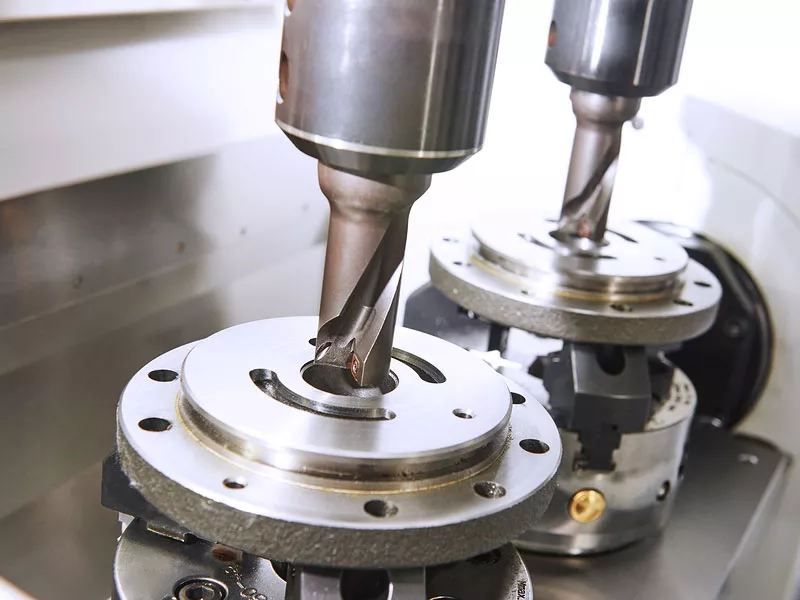
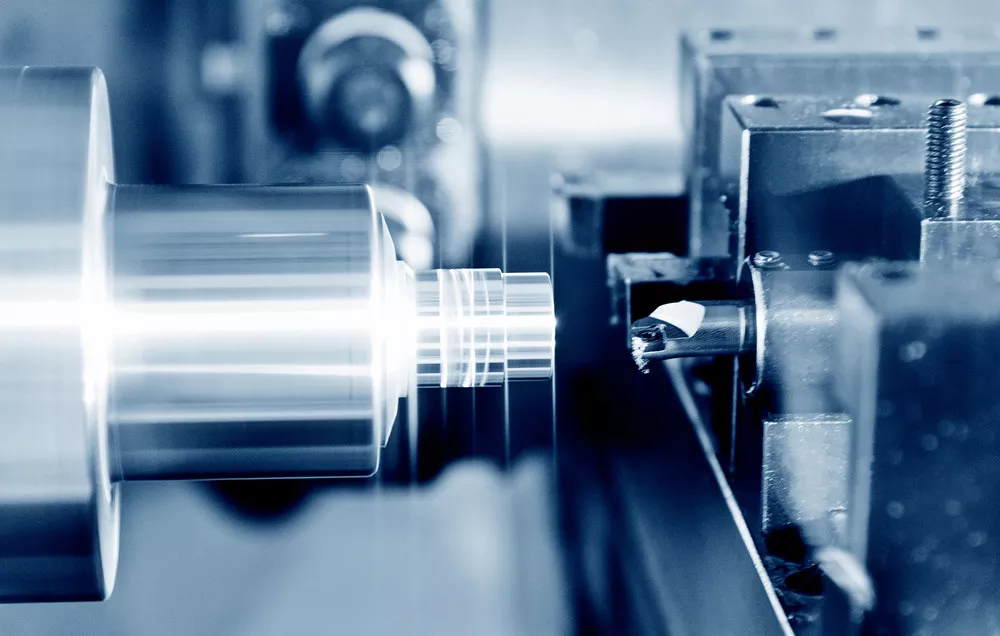
China is now the center of CNC machining services for aluminum alloys compared to other countries due to its ability to produce high-quality parts at low cost. Aluminum alloys are considered one of the most suitable metals for CNC machining because they are relatively easy to machine and have all the properties required for machining, such as lightweight and robustness. This article focuses on the aluminum alloy material and information about its CNC machinability.
Aluminum is the easiest metal to machine and can be easily formed and machined by various CNC machines. Compared to steel, this metal is very little difficult to machine. Aluminum offers tremendous benefits to machinists and customers who order parts. It also exhibits excellent machining quality, allowing for minor distortion during machining. This allows for the machining of higher precision metal parts and higher tolerance parts when using CNC machines specifically designed for machining aluminum alloys.
Advantages of aluminum materials in extreme atmospheric conditions
Aluminum alloys exhibit high scratch and corrosion resistance, even in marine and extreme atmospheric conditions. We can further improve these properties by anodizing the metal. It is important to note that all types of aluminum alloys do not have the same corrosion resistance. Aluminum alloys used in CNC machining have a higher resistance.
In addition, aluminum alloys are one-third the density of steel, making them slightly lighter than steel. Even as lightweight metals, aluminum alloys exhibit high strength. This wonderful combination of lightness and strength is called the strength-to-weight ratio of metal. Because of its high strength-to-weight ratio, aluminum alloys are preferred by many industries, including the automotive and aerospace industries.
At room temperature, pure aluminum alloys have an electrical conductivity of approximately 37.7 million Siemens per meter. However, the electrical conductivity of aluminum alloys is low relative to pure aluminum alloys but still provides good results in producing various parts. Sometimes the electrical conductivity of aluminum alloys does not match the output of the desired part and is therefore considered to be an unsuitable material.
Due to the subtractive manufacturing process, aluminum alloys are highly recyclable. In CNC machining, we can produce many chips as scrap. Since the aluminum alloy is recyclable, it requires little energy, less effort, and an affordable recycling cost. This property of aluminum alloy makes it an ideal material for lower budgets and with a focus on low material waste. It also makes aluminum alloy an environmentally friendly mechanical material.
Surface treatment of aluminum alloys
Once the machining process is complete, several surface treatments are available to improve the part’s physical, mechanical, and aesthetic properties. Bead blasting and sandblasting are processes performed for aesthetic purposes. In this process, a compressed air gun is used to process the part with a tiny glass bead blasting machine under high pressure. This removes excess material and creates a smooth surface, giving a satin or matte finish to CNC-machined parts made of aluminum. Polishing and painting can also be used as finishing methods if desired.
Anodizing is another surface treatment method. In this process, CNC-machined aluminum parts are exposed to a dilute sulfuric acid solution, and a voltage is applied between the cathode and anode. This is an electrochemical process, and once the voltage is applied, the part’s exposed surface is anodized to form a hard, non-electrically reactive layer of oxidized aluminum alloy. The solution concentration, anodizing time, and current determine the thickness and density. Anodizing can also be used to color parts.
Powder coating is another surface finishing process that helps improve strength and wear resistance, corrosion resistance, and impact resistance. In this process, a colored polymer powder is applied to the part using an electrostatic gun. Once the process is complete, the part is cured at 200 °C.
Types of aluminum alloys suitable for CNC machining
Several aluminum alloys are available for CNC machining, each with unique characteristics. The 2024 aluminum alloy is widely used in aerospace because of its high hardness and copper content. Aluminum alloy 5052 is best suited for producing parts that require relatively strong bending and welding, as they can be easily stretched or formed into complex shapes. Aluminum alloy 6061, on the other hand, has the advantages of the aluminum alloy 4000 and 5000 series, making it successful in industries that require high strength and corrosion resistance.
Types of aluminum alloys used in CNC machining
Aluminum alloy 2024: This alloy series is hard and has a high copper content of about 3-5%. It is widely used in the aerospace industry.
Aluminum alloy 5052: Its main properties include low density, high tensile strength, and high elongation. This series is best suited for producing parts that require relatively strong bending and welding, as they can be easily stretched or formed into complex shapes.
6061 Aluminum Alloy: The 6061 aluminum alloy has the advantages of the 4000 and 5000 series of aluminum alloys, as its main components are magnesium and silicon. 6061 is successful in industries requiring high corrosion and oxidation resistance. 6061 has good availability, ease of coating, and machinability, making it the aluminum alloy of choice for CNC machining.
Aluminum alloy 6063: This series is also known as a construction alloy. Aluminum alloy 6063 is suitable for making various strong, corrosion-resistant industrial structural parts.
Aluminum alloy 7075: The newest series is called “super hard aluminum alloy.” It is one of the strongest aluminum alloys. These alloys have excellent mechanical properties and anodizing but are unsuitable for welding and have limited corrosion resistance. They are preferred for manufacturing highly stressed parts, mainly in aerospace, machining tools, machinery, and fixtures.
Summary
In summary, CNC machining services for aluminum alloys in China offer a cost-effective solution for producing high-quality parts with excellent machining quality. Aluminum alloys are ideal for CNC machining with easy machinability, good corrosion resistance, perfect strength-to-weight ratio, and high recyclability.