How to choose the right CNC machining service for metal medical parts
Medical equipment is an important part of the hospital. Hospitals must ensure the normal and safe operation of CNC machining of metal medical equipment. Therefore, there are strict requirements for the quality of CNC machining of metal medical equipment in the production process. CNC machining technology of metal medical equipment is the key technology that CNC processors need to master.
The basic principles of CNC machining of medical devices, process flow, and materials were used until various CNC machining equipment, and new technologies emerged to produce the actual parts. Inspection needs to be independent of the quality inspection of production. One strictly controls the size according to the drawings, and the other strictly controls the appearance quality.
If the dimensions of the CNC machined parts of metal medical devices do not meet the requirements, they need to be repaired or scrapped. The appearance does not allow scratches, and the color difference, corrosion resistance, and adhesion are inspected after painting. This will identify errors in the development drawings, bad habits in the manufacturing process, and errors in the manufacturing process, thus improving the quality of metal medical device parts.
What is CNC machining of metal medical parts?
Medical parts machining refers to the various technologies used to manufacture metal parts for the medical industry. These parts can include those used for medical devices, implants and prostheses, and other medical devices. The specific processes used to produce these parts will depend on the requirements of the parts, including their size, shape, and level of precision required. Some common processes used in medical parts are machining, stamping, forging, casting, and additive manufacturing (also known as 3D printing). These processes involve using tools, machines, and special equipment to form, shape, and finish metal materials into the desired parts.
The current state of the market for medical parts machining
The precision processing industry for medical parts originated in the early 1960s in economically developed countries and regions such as Japan, Europe, and the United States. With the rapid development of industrial and information technology, advanced production management concepts such as lean manufacturing and flexible manufacturing emerged and were widely used in the precision parts CNC machining industry. With the increasing diversification of market demand and market competition, large manufacturers gradually outsource the precision machining of high-end equipment parts to more professional precision machining enterprises.
The production of CNC machining medical parts requires high-value precision equipment with high fixed costs. However, high-end medical parts products are highly characteristic. If the company focuses on small customers, there will often be a small number of orders and a large variety of orders, which increases the workload of production development, the number of production line debugging, and the frequency of product switching, thus increasing costs and affecting the company’s profitability. Therefore, the strategy of serving large customers is the first choice of high-quality enterprises in the high-end medical parts precision machining industry, in line with the production and operation characteristics of the industry, i.e., it helps companies to dilute fixed costs, achieve common growth with large customers and provide strong support for the long-term development of the company.
Larger or focused on industry-specific areas of the enterprise, advanced technology, and equipment, strong financial strength. Under the guidance of their advanced management concepts, they provide customized high-end medical parts precision machining services to their customers. At the same time, by establishing long-term and stable supply chain relationships with strategic customers, they gradually expand the scale of their operations, enhance their overall strength, increase their market share, and thus improve the overall concentration of the industry.
What are the reasons for the difficulties in processing metal medical parts?
Medical shells are generally made of ABS engineering plastic. ABS is simple to make, fast to mold and has no external restrictions. It can also be opened, and many copper molds can be opened. Small quantities can be made with plastic molds, and even proofing can be combined with machine and hand or purely by hand. The hand can solve the messy surface. Medical shell made of ABS plastic has the advantages of being non-toxic, not easily deformed, having a beautiful appearance, having a strong structure, being lightweight, low noise, corrosion resistance, aging resistance, etc. But more medical equipment parts are made of metal; metal processing has always been more difficult than plastic processing, so what are the current difficulties in processing metal medical parts?
Medical device processing equipment needs to be able to process small and complex parts made of difficult-to-machine materials (such as titanium or stainless steel) with high accuracy requirements, such as replacement parts for processing bones and joints, which are quite complex. Due to the machined material’s poor machinability, the blank is usually a bar – which means that a large amount of metal needs to be removed. So some parts are cast into near-finished shapes, but this adds to the trouble – requiring the fabrication of complex and expensive fixtures. Another factor that adds to the complexity of machining is the narrow range of tolerances.
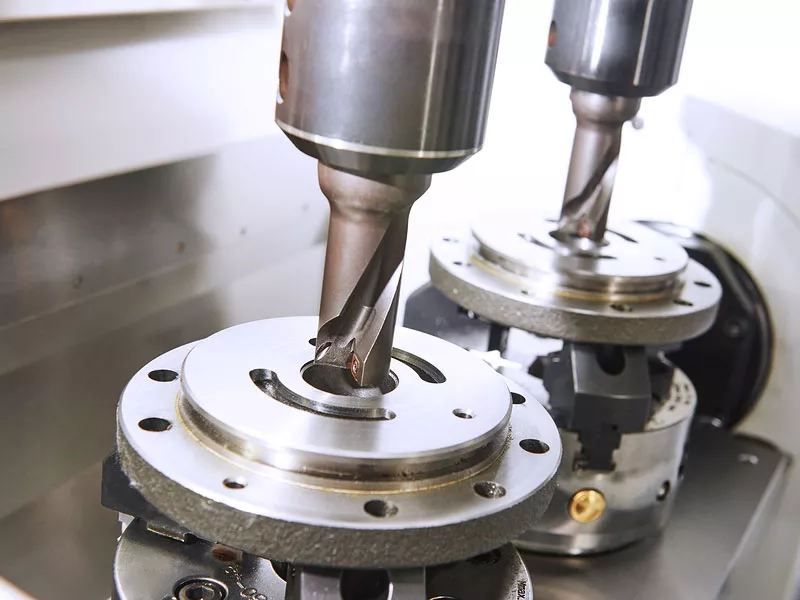
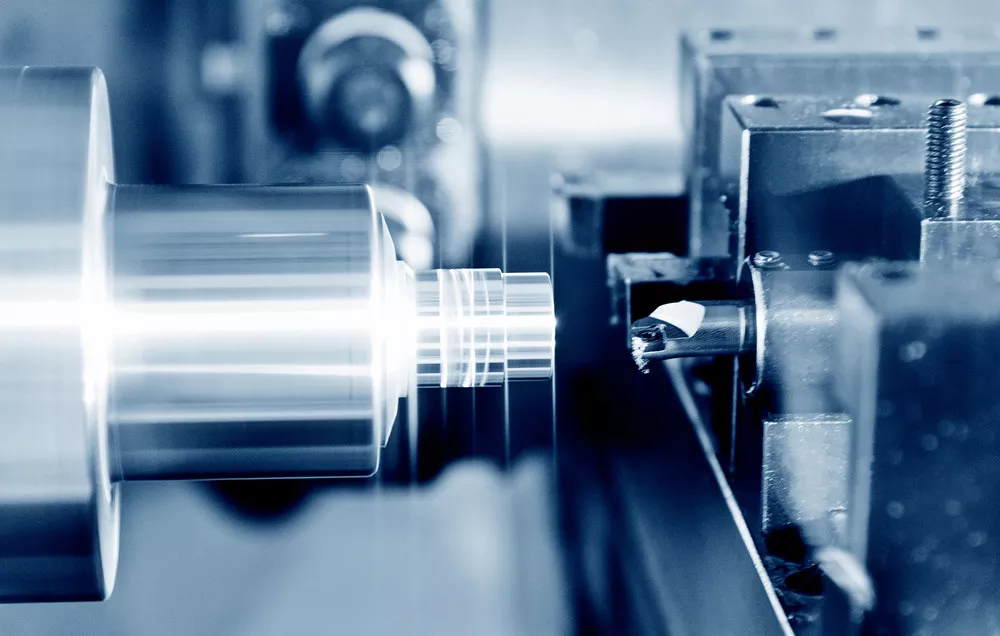
Medical device parts require high material, machining accuracy, and surface finish, which requires high reliability of the CNC machining system. This results in extremely high requirements for machine tools, fixtures, tools, CAM software, etc. Workpieces are usually processed on advanced medical equipment such as Swiss automatic lathes, multi-axis machine tools, and rotary tables. Most of these machine tools are characterized by their small size and compact structure.
The characteristics and requirements of medical device parts machining have undoubtedly contributed to the development of CNC technologies and solutions to improve the competitiveness and productivity of SMEs in medical device machining.
Ti6Al-4V titanium alloy is used in 90% of implantable parts for medical devices due to its lightweight, high strength, and biocompatibility. Titanium alloy 6AL-4V has become a common material for medical implant devices. Titanium alloy 6AL-4V is commonly used to manufacture hip joints, bone screws, knee joints, bone plates, dental implants, and spinal connection elements.
The key to solving the problem is ensuring the entire system’s rigidity. The use of sharp edges and the correct geometry of the tool are essential. In addition, titanium alloys tend to chemically react, and alloy with the tool at high temperatures, and their chips tend to weld to the tool surface.
How can I identify a CNC processor of metal medical parts that meets the requirements for collaboration?
The following steps can be taken to find a CNC processor of metal medical parts that meets the requirements for cooperation:
Determine your specific needs: Consider the requirements for your metal medical parts, including materials, dimensions, and tolerances. This will help you narrow your search to a processor that can meet your needs.
Research potential CNC processors: Look for processors with the equipment and expertise needed to produce the needed parts. You can search online directories or industry associations or seek advice from other companies in your industry.
Evaluate their capabilities: Contact the processors you are considering and ask for information about their capabilities, including the type of CNC machining equipment available, their quality control processes, and their experience handling metal medical parts.
Get quotes: Ask for quotes from the processors you are considering to compare their prices and determine which is the most cost-effective for you.
Check references: Ask for references or talk to other companies that have used the processor you are considering to learn about their reputation and quality of work.
Make a decision: Based on your gathered information, select the processor that best meets your needs and budget.
It’s a good idea to have a written agreement outlining the terms of your partnership, including the scope of work, pricing, delivery schedule, and other relevant details.
Anpllocnc Precision Parts Machining Facility
Anpllocnc Precision Parts CNC Machining Factory is a modern manufacturer of metal medical parts, covering all parts machining for the medical industry. Processing accuracy up to 0.01μm to provide customers with high precision, excellent quality, and excellent products; and according to customer drawings, samples, requirements, and other aspects, custom processing; Anpllocnc as a modern manufacturer of CNC precision medical parts, CNC machining as the core technology, with physical factories and testing equipment, integration of rapid prototyping, mold, post-processing and other supporting manufacturing resources, to provide customers to provide rapid prototyping, small and medium batch manufacturing, trial assembly, to truly realize the heart-saving one-stop service; enterprises have imported precision CNC processing equipment, as well as a rich non-standard production experience of the technical team, with rich production experience.