CNC lathe turning machining master technique secrets!
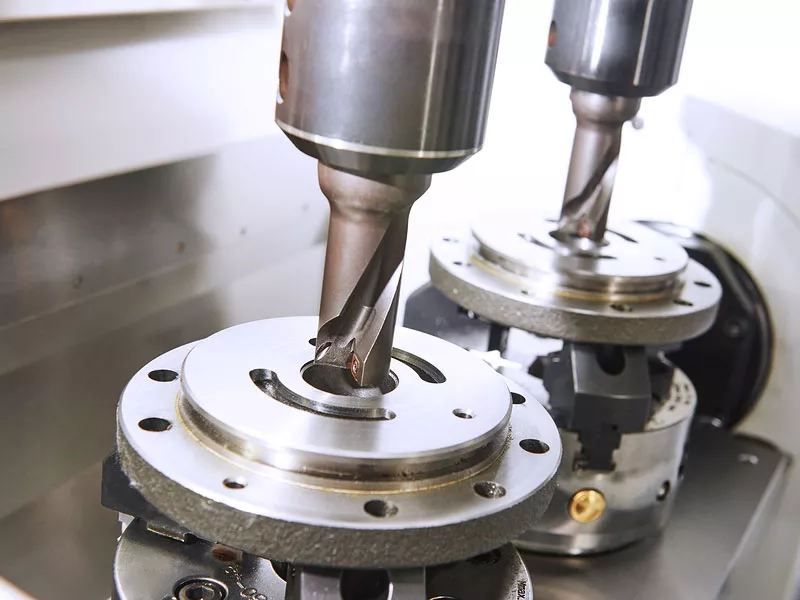
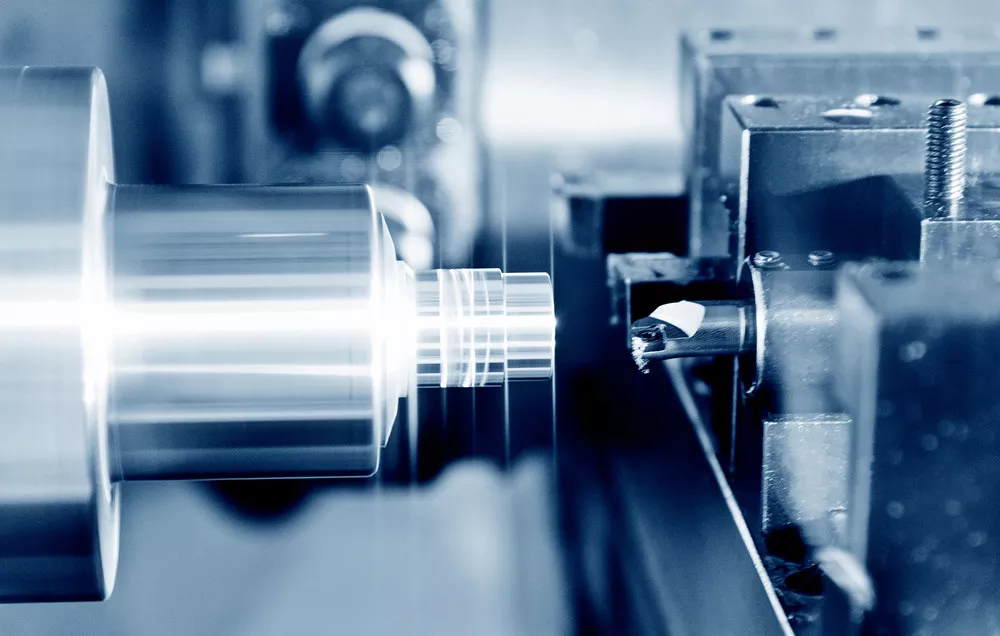
Turning means lathe machining is a part of machining. Lathe machining mainly uses turning tools to turn the rotating workpiece. The lathe is mainly used for processing shafts, discs, sets, and other workpieces with rotary surfaces. It is the most widely used class of machine tool processing in machinery manufacturing and repair factories.
Turning skills are inexhaustible, and the most common turners do not need too high skills. It can be divided into 5 categories of turners, which are the most common in society.
1. Ordinary mechanical turner, simple and easy to learn, find a lathe processing department, then you learn in school.
2. mold turner, especially plastic mold precision turner! Strict requirements for tooling and accurate size.
To know what steel varnish effect is good, the mirror surface.
Car out of the finish to be good, easy to polish, to achieve the mirror effect, need to have a plastic mold foundation, 4 claws are very common, usually a few templates together with the car; plastic mold thread knowledge must be mastered! The difficulty is great!
3. tool turner, processing reamer, drill, alloy tool plate == tool dry; this kind of turner is the simplest, the best dry, and the most tired.
Usually are mass production, the most commonly used is the double top, car taper, and flow modulus to make the fastest and simplest, to reduce tool wear to a minimum; because the products processed by this turner, the hardness is not much lower than your white steel knife! Your alloy knife grinding, good or bad, completely affect your results!
4. large equipment turner, this turner has senior technology, young people dare not a car!
More often, with a vertical car. Example: car a crankshaft, you have to first look at the drawings repeatedly n times, a first car which and after the car which, is the amount of lost grinding, or direct processing to the size, the thread is positive or negative … and some advanced technology.
5. CNC turner, this kind of turner is the easiest but also the most difficult; first, you have to be able to read the drawings, programming, conversion formula, and tool application!
You will turn the theory of mastery and have some math, mechanical, and cad knowledge to learn quickly.
Turning processing is on the lathe, the use of the rotary motion of the workpiece and the linear or curvilinear motion of the tool to change the shape and size of the blank; it is processed to meet the requirements of the drawings.
Turning is a method of cutting the workpiece on the lathe by using the workpiece to rotate relative to the tool. The cutting energy for turning is mainly provided by the workpiece rather than the tool. Turning is the most basic and common cutting method and occupies a very important position in production. Turning is suitable for processing rotary surfaces; most of the workpieces with the rotary surface can be processed by turning methods, such as internal and external cylindrical surfaces, internal and external conical surfaces, end face, groove, thread, and rotary forming surfaces, etc., the tool used is mainly turning tool.
In all kinds of metal cutting machine tools, lathes are the most widely used category, accounting for about 50% of the total number of machines. The lathe can be used for turning the workpiece, but also with a drill, reamer, tap, and knurling tool for drilling, reaming, tapping, and knurling operations. According to the different process characteristics, layout forms, and structural characteristics, lathes can be divided into horizontal lathes, floor lathes, vertical lathes, turret lathes, and profiling lathes, etc., most of which are horizontal lathes.
Safety technology issues
Turning processing is the most widely used in the machine manufacturing industry; the number of lathes is large, the number of personnel is large, the processing range is wide, and the tools and fixtures used are many, so the safety technology of turning to process is particularly important, and the key work is as follows.
1, the chip injury and protective measures. Lathe processing of various steel parts is tougher, turning chips rich in plastic curl, and the edge is relatively sharp. In high-speed cutting, steel parts will form red-hot, very long chips, easy to hurt, while often entangled in the workpiece, turning tool. Tool holder, so the work should often use the iron hook to clean up or pull off in time; if necessary, should stop to remove, but not allowed to use hands to remove or pull off. To prevent chip injury, often take chip breaking, control chip flow measures, and add a variety of protective baffles. To break the chip, grind out the chip break groove or step on the turning tool; use the appropriate chip breaker using the mechanical jamming tool.
2、The workpiece is mounted. In turning to process, due to improper loading of the workpiece and damage to the machine tool, broken or broken tool and the workpiece fell or flew out of the number of accidents injured. Therefore, to ensure the safety of cnc turning production, the workpiece must be loaded with extra attention. The size and shape of the parts to choose the appropriate fixture, regardless of the three-jaw, four-jaw chuck, or special chucks and spindle coupling, must be stable and reliable. For the workpiece to be card secured, a large workpiece card tight available casing ensures that the workpiece has high-speed rotation and cutting force is not displaced, off, or thrown out. Use the top, center frame, etc., to enhance the fastening. Remove the moving hand immediately after clamping.
3, safe operation. Check the machine tool thoroughly before work to confirm well before use. Workpieces and tools to ensure the correct position are solid and reliable. During processing, changing the tool, loading and unloading workpieces, and measuring workpieces must stop. The workpiece should not be touched by hand or wiped with cotton wool when rotating. To properly select the cutting speed, feed, and eating depth, no overload processing. The bed head, tool holder, and bed shall not be placed on the workpiece, work card, and other miscellaneous objects. When using the file to move the turning tool to a safe position, the right hand in front, and the left hand in the back, prevent the sleeve from getting involved. The machine should have a person responsible for its use and maintenance; others are not allowed to use it.
Caution
CNC lathe processing is similar to that of an ordinary lathe. Still, since the CNC lathe is a one-time clamping and requires continuous automatic processing to complete all turning processes, the following aspects should be noted.
Good selection of cutting dosage.
The three major elements are for high-efficiency metal cutting processing, machining material, cutting tools, and cutting conditions. These determine the processing time, tool life, and processing quality. Cost-effective processing is necessarily a reasonable choice of cutting conditions. The three elements of cutting conditions: cutting speed, feed, and depth of cut, directly cause damage to the tool. With increased cutting speed, the tool tip temperature rises, and mechanical, chemical, and thermal wear occurs. A 20% increase in cutting speed reduces tool life by 1/2. The relationship between feed conditions and wear behind the tool arises in a very small range. However, with high feeds, cutting temperature rises, and back wear are high. It has a smaller effect on the tool than cutting speed. The impact of the depth of cut on the tool is not as great as the cutting speed and feed, but in the tiny depth of cut cutting, the material being cut produces a hardened layer, which also affects the tool’s life. Users should select the cutting speed to be used according to the material to be machined, hardness, cutting condition, material type, feed, depth of cut, etc.
The most suitable machining conditions are selected based on these factors. Regular and stable wear to reach life is the ideal condition. However, in actual operation, the selection of tool life is related to tool wear, variation in machined dimensions, surface quality, cutting noise, machining heat, etc. When determining the machining conditions, it is necessary to study the actual situation. Coolant can be used for difficult-to-machine materials such as stainless steel and heat-resistant alloys, or choose a good cutting-edge rigidity.
Rational selection of tools.
(1) When rough turning, choose a tool with high strength and good durability to meet the requirements of a large back draft and large feed during rough turning.
(2) When finished turning, choose tools with high precision and good durability to ensure the requirements of machining accuracy.
(3) To reduce the time of tool change and facilitate tool setting, machine-chucked tools and inserts should be used as much as possible.
3、Rational selection of fixtures.
(1) try to use the general-purpose fixture to clamp the workpiece to avoid using special fixtures.
(2) the part positioning reference overlap to reduce positioning errors.
Four determine the processing route.
The machining route refers to the CNC machine tool machining process, the tool relative to the trajectory and direction of the part.
(1) should be able to ensure machining accuracy and surface roughness requirements.
(2) should be as short as possible to shorten the processing route and reduce the tool empty travel time.
The link between the machining route and the machining allowance.
Currently, under the condition that the CNC lathe has not yet reached widespread use, the excessive margin on the blank, especially the margin containing forging and casting hard skin layer, should generally be arranged to be processed on the ordinary lathe. If you have to use a CNC lathe, pay attention to the flexible arrangement of the program.
Fixture installation points.
Currently, the connection between the hydraulic chuck and hydraulic clamping cylinder is * a tie rod. To achieve this, hydraulic chuck clamping points are as follows:
- First, remove the nut on the hydraulic cylinder with a moving hand.
- Remove the draw tube.
- Pull out from the back end of the spindle.
- Remove the chuck set screw with a moving hand; you can remove the chuck.
General Code
Clamping of the turning tool
(1) The turning toolbar should not be too long out of the tool holder, and the available length should not exceed 1.5 times the height of the toolbar (except for turning holes, slots, etc.)
2) The center line of the turning toolbar should be perpendicular or parallel to the direction of the tool walking.
3) Adjustment of tooltip height.
a. When turning the end face, tapered surface, thread, forming surface, and cutting the solid workpiece, the tooltip should generally be equal to the workpiece axis.
b、Rough turning outer circle, fine turning hole, the tooltip should be slightly higher than the workpiece axis.
c. When turning a slender shaft, rough turning hole, or cutting a hollow workpiece, the tooltip should be slightly lower than the workpiece axis.
(4) The tangent line of the tip angle of the threaded turning tool should be perpendicular to the workpiece axis.
(5) When clamping the turning tool, the shim under the toolbar should be less flat, and the screw that presses the turning tool should be tightened.
Clamping of workpiece
1) When using a three-jaw self-centering chuck to clamp the workpiece for rough turning or finishing turning, if the diameter of the workpiece is less than 30mm, its overhanging length should be no more than 5 times the diameter; if the diameter of the workpiece is more than 30mm, its overhanging length should be no more than 3 times of the diameter.
2) To clamp an irregularly biased workpiece, a counterweight must be added when using a four-jaw single-action chuck, chuck, angle iron (bending plate), etc…
3) When machining shaft workpieces between the tops, adjust the axis of the top of the tailstock to coincide with the axis of the lathe spindle before turning.
4) When slender machining shafts between the two tops, use a follow tool holder or center holder. In machining, pay attention to adjusting the maximum tightness of the center, and the dead center and the center frame should be lubricated.
5) When using the tailstock, the sleeve should be extended as short as possible to reduce vibration.
6) When clamping workpieces with a small support surface and high height on the vertical lathe, use higher jaws and add a tie bar or pressure plate to tighten the workpiece in the right part.
7) When turning wheel and sleeve castings and forgings, the surface should be corrected according to the unmachined surface to ensure uniform wall thickness of the workpiece after machining.
Turning to process
1) When turning the step shaft, to ensure the rigidity of turning, the larger diameter part should be turned first, and the smaller diameter part should be turned later.
2) When cutting grooves on the shaft workpiece, it should be done before finishing turning to prevent deformation of the workpiece.
3) The threaded part should be turned after the thread processing when turning a threaded shaft.
4) The end face of the workpiece should be flat before drilling. If necessary, the center hole should be punched first.
5) The pilot hole should be drilled first when drilling a deep hole.
6) When turning (Φ10-Φ20) mm hole, the diameter of the toolbar should be 0.6-0.7 times the hole diameter to be machined; when machining a hole with a diameter larger than Φ20 mm, the toolbar with a clamped tool head should be used in general.
7) When turning multi-head thread or multi-head worm gear, test cutting should be done after adjusting the exchange gear.
8) When using an automatic lathe, the relative position of the tool and workpiece should be adjusted according to the machine tool adjustment card, and test turning should be carried out after adjustment, and the first piece should be qualified before processing; pay attention to the wear of the tool and the size and surface roughness of workpiece at any time during processing.
9) When turning on the vertical lathe, when the tool holder is adjusted, do not move the beam at will.
10) When the workpiece has position tolerance requirements on the surface, try to finish turning in one clamping.
(11) When turning the cylindrical gear tooth blank, the hole and the reference end face must be processed in one clamping. A marking line should be turned near the gear indexing circle on the end face if necessary.
Error compensation
Modern machinery manufacturing technology is developing in the direction of high efficiency, high quality, high precision, high integration, and high intelligence. Precision and ultra-precision machining technology has become the most important part of modern machinery manufacturing and the direction of development. It has become a key technology in improving international competitiveness. Turning machining errors with the widespread use of precision has also become a popular research subject. As the various errors in the machine tool, thermal and geometric errors occupy the majority, so reducing these two errors, especially the thermal errors, has become the main goal. Error Compensation Technique (ECT) has emerged and developed with the continuous development of science and technology. The loss caused by the thermal deformation of the machine tool is quite large. Therefore, it is necessary to develop a high-precision, low-cost thermal error compensation system to meet the actual production requirements of the factory to correct the spindle (or workpiece) and the cutting tool between the thermal error to improve machine tool machining accuracy, reduce scrap, increase productivity and economic efficiency.
Basic definition
The basic definition of error compensation is to artificially create a new error to offset or greatly reduce the current problem of the original error through analysis, statistics, generalization, and mastering the characteristics and laws of the original error, the establishment of the mathematical error model, as far as possible to make the error caused by man and the original error both equal in value and opposite direction, to reduce machining errors and improve the dimensional accuracy of the parts.
The earliest error compensation is realized by hardware. Hardware compensation is an automatically fixed compensation. In the machine, error changes to change the amount of compensation must be re-made parts, correction ruler, or readjust the compensation mechanism. Hardware compensation and can not solve the random error the lack of flexibility shortcomings. The machine itself characterizes the recent development of software compensation without any changes and the extensive use of contemporary disciplines of advanced technology and computer control technology to improve the accuracy of machine tool processing. Software compensation to overcome the many difficulties and shortcomings of hardware compensation and compensation technology to a new stage.
Characteristics
Error compensation (technology) has two main characteristics: scientific and engineering.
The rapid development of scientific error compensation technology has greatly enriched the theory of precision mechanical design, precision measurement, and the whole precision engineering, becoming an important branch of this discipline. Technology related to error compensation includes detection, sensing, signal processing, optoelectronic, material, computer, and control technology. As a new technical branch, error compensation technology has independent content and characteristics. It will be of great scientific significance to further study the error compensation technology and make it theoretical and systematic.
The engineering significance of engineering error compensation technology is very significant; it contains three layers of meaning:
- Using error compensation technology can easily achieve the “hard technology” of spending much money to achieve accuracy.
- Using error compensation technology can solve the “hard technology “that usually can not reach accuracy.
- In the case of meeting certain accuracy requirements, if the use of error compensation technology can greatly reduce the cost of instruments and equipment manufacturing, it has very significant economic benefits.
Turning machining thermal error generation and classification
With the further improvement of machine tool accuracy requirements, the proportion of thermal errors in the total error will continue to increase, and machine tool thermal deformation has become the main obstacle to improving machining accuracy. Machine tool thermal error is mainly caused by the motor, bearings, transmission parts, hydraulic system, ambient temperature, coolant, and other internal and external heat sources caused by the machine tool components’ thermal deformation. Machine geometry error from the machine tool manufacturing defects, the fit error between the machine tool components, machine parts of the dynamic, static displacement, etc…
Error compensation basic method
In summary and related references, it is known that the following factors generally cause turning errors: machine tool thermal deformation error; machine parts and structure of the geometric error; cutting force caused by the error; tool wear error; other sources of error, such as machine axis servo error, CNC interpolation algorithm error, etc… Improving the accuracy of machine tools has two basic methods: error prevention method and error compensation method.
The error prevention method attempts to eliminate or reduce the possible sources of error through the design and manufacturing path. The error prevention method is effective to a certain extent in reducing the temperature rise of the heat source, equalizing the temperature field, and reducing the thermal deformation of the machine tool. But it is impossible to eliminate thermal deformation, and the cost is very expensive. Applying the thermal error compensation method opens up an effective and economical way to improve the accuracy of the machine tool.
Related conclusions
Turning machining error research is the most important part of modern machinery manufacturing and the development direction and has become the key technology to improve international competitiveness; the error is generated in many ways, and the analysis and study of thermal error are conducive to improving the turning accuracy and technical requirements.
Error compensation technology can meet the current factory production requirements of high precision and low cost; thermal error compensation technology can correct the spindle (or workpiece) and cutting tool between the thermal drift error, improve machine tool machining accuracy, reduce scrap, and increase productivity and economic efficiency.
Common problems
When an ordinary lathe is strongly turning large pitch threads, sometimes bed saddle vibration will occur, which will cause ripples on the machined surface in light cases and break the tool in serious cases. And when cutting off, students often have the phenomenon of sticking or breaking the tool. There are many reasons for the above problems, so we will discuss this phenomenon and the solution mainly by analyzing the side of the force situation of the tool.
The problem and its causes
We know that when turning threads with a small pitch, the straight cutting method is generally used (in the direction perpendicular to the workpiece axis to make a straight line into the tool); when turning threads with a large pitch, to reduce the cutting force, the left and right borrowing cutting method is often used (by moving the small slide to let the thread turning tool cut with the left and right cutting edge respectively).
When turning threads, the bed saddle is moved by the rotation of the long screw, which drives the movement of the opening and closing nut. There is axial clearance at the bearing of the long screw and axial clearance between the long screw and the opening and closing nut. When using the left and right borrowing cutting method to strongly turn the right-hand worm with the right main cutting edge, the tool bears the force P (ignoring the friction between the chip and the front tool surface, as in Figure 1), the force P is decomposed into axial force Px and radial force coincident, where the axial force Px is the same as the tool feed direction, the tool transmits the axial force Px to the bed saddle, thus pushing the bed saddle to the side with clearance to do a rapid The result is that the tool moves back and forth and makes the machining surface ripple, and even break the tool. When cutting with the left main cutting edge, the axial force Px of the tool is opposite to the direction of feed and moves in the direction of eliminating the gap, and the bed saddle moves at a constant speed.
When cutting, the movement of the middle slide is driven by the rotation of the middle slide screw to achieve the movement of the nut; there is axial clearance at the screw bearing, and there is also axial clearance between the screw and the nut. Cut off in the lathe, the tool’s front surface (with the front angle) withstand the workpiece to it the force P (ignoring the friction between the chip and the front surface, such as Figure 2), the force P decomposed into force Pz and radial force coincidence, which radial force coincidence with the cut off the cutting tool feed direction, pointing to the workpiece, the tool will be pushed toward the workpiece, which will pull the slide plate to the direction of the gap, so that the cut off knife suddenly zap the workpiece, resulting in Tie (break) knife or workpiece bending.
Solution
When turning threads with large pitch using the left and right borrowing tool cutting method, in addition to adjusting the relevant parameters of the lathe, the clearance between the bed saddle and the bed guide should be adjusted so that it is slightly tighter to increase the friction when moving and reduce the possibility of the bed saddle faltering. Still, the clearance should not be adjusted too tightly to be able to shake the bed saddle smoothly.
Adjust the gap of the middle slide plate; try to make the gap as small as possible; adjust the tightness of the small slide plate, and make it a little tighter to prevent the turning tool from shifting when turning. The length of the workpiece and the toolpost should be shortened as much as possible, and the left main cutting edge should be used as much as possible; when cutting with the right main cutting edge, the back eating amount should be reduced; the front angle of the right main cutting edge should be increased, and the cutting edge should be straight and sharp to reduce the axial force Px borne by the tool. Theoretically, the larger the front angle of the right main cutting edge, the better.